“When will it start?”
It’s a question that echoes in the minds of many women as they approach their 40s and 50s. In the quiet moments, we wonder when we’ll begin our own journey with menopause. To find a clue, many of us look to the most significant woman in our lives: our mother. We ask her when she started, what it was like, and what we should expect. Her story often becomes the blueprint we hold in our minds for our own future.
And it’s true—family history, particularly your mother’s experience, offers powerful clues about your own menopause timeline. The age she was when her periods stopped for good is one of the most reliable predictors for the age you will be. But it’s not a guarantee. The story of when and how you’ll experience menopause is a rich, complex narrative co-authored by your genes and your life.
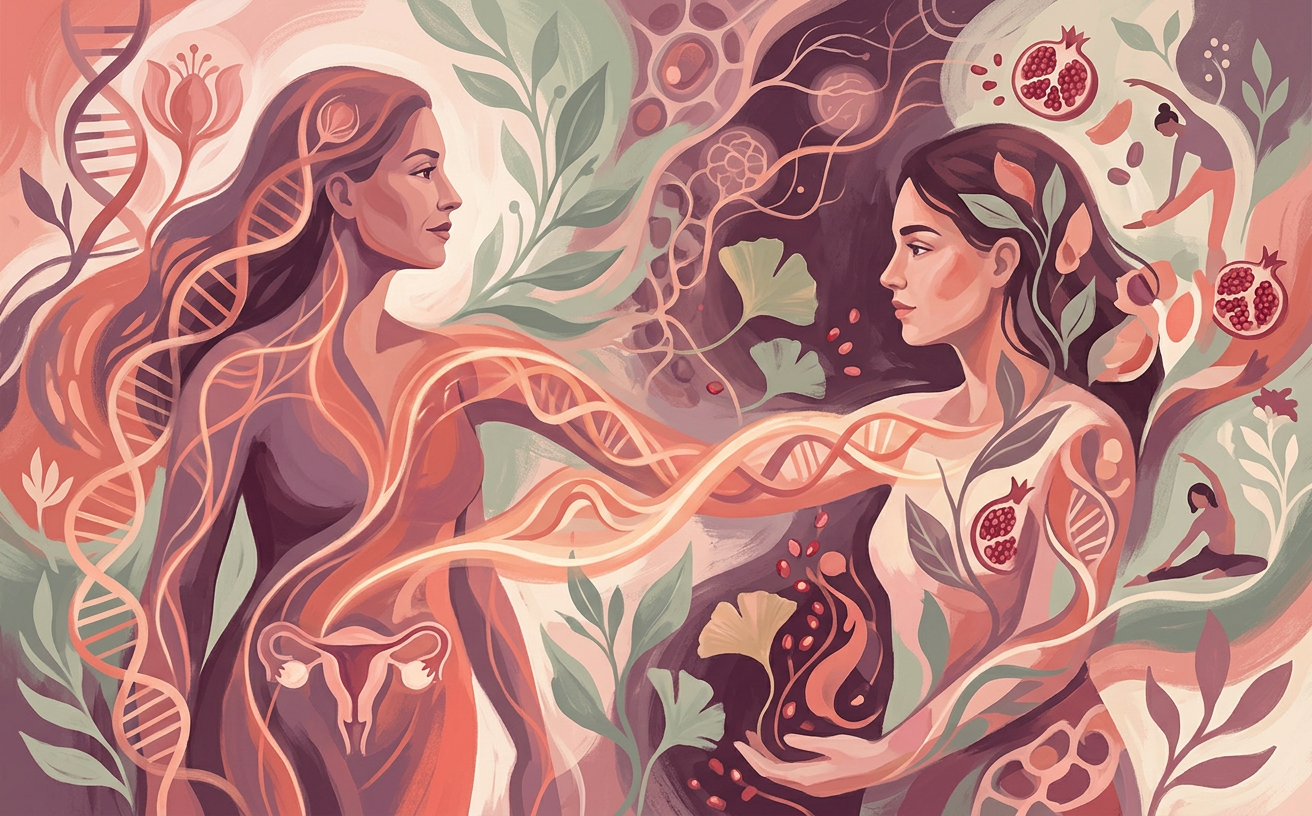
Think of it less as a destiny written in stone and more as a genetic starting point. Your genes might chart the course, but your lifestyle, environment, and personal health history are the navigators that can shift the timeline. Understanding this interplay is incredibly empowering. It allows you to honor the genetic map you’ve been given while appreciating the power you have to influence your own journey. Let’s explore that beautiful complexity together.
The Genetic Connection: A Family Affair
When we talk about the timing of menopause being “hereditary,” what do we really mean? Research suggests that genetics account for 50% to 60% of the variation in the age of natural menopause. That’s a significant number, and it confirms that the experiences of our female relatives hold important information.
While your mother’s age at menopause is a key indicator, the genetic story doesn’t begin and end with her. It’s a wider family affair. The timing of your sisters’ menopause, for example, is also a very strong predictor for your own. In fact, some studies show identical twins tend to enter menopause within a year or two of each other. The genetic web also includes your maternal and paternal aunts and grandmothers. If the women in your family generally experienced menopause in their early 50s, it’s a reasonable starting point for your own expectations. Conversely, if a pattern of earlier menopause (before age 45) exists in your family, it’s valuable information to share with your clinician.
This genetic inheritance is not about a single “menopause gene.” It’s a complex symphony of hundreds, possibly thousands, of genes working together. These genes influence everything from the size of your original ovarian reserve (the number of eggs you’re born with) to how quickly that reserve declines over your lifetime. They regulate the intricate dance of hormones like estrogen and progesterone, which ultimately governs your menstrual cycle. It’s this complex genetic inheritance that lays the foundation for your personal menopause timeline.
When Lifestyle Steps In: The “Nurture” Factors
Genetics may load the gun, but environment and lifestyle often pull the trigger. While you can’t change your DNA, a number of factors within your control can influence when your menopause journey begins—sometimes shifting it earlier or later by several years. These “nurture” factors are a critical part of the equation.
Smoking
Of all lifestyle factors, smoking has the most profound and well-documented impact on menopause timing. On average, women who are long-term, regular smokers experience menopause one to two years earlier than non-smokers. The toxins in cigarette smoke are thought to have a toxic effect on the ovaries, accelerating the depletion of your egg supply. The more and the longer you’ve smoked, the stronger this effect can be. This is a powerful reminder that choices we make for our overall health have a direct impact on our reproductive health, too.
Body Mass Index (BMI)
Your body composition, and particularly your amount of body fat, plays a fascinating role in hormone regulation. Fat cells can produce and store a form of estrogen. Because of this, a woman’s BMI can influence her menopause timeline in either direction.
Women with a very low BMI may experience earlier menopause. This may be because having lower body fat reserves can lead to lower overall estrogen levels, which can signal to the body to begin the menopause transition sooner. On the other hand, women with a higher BMI sometimes experience a later onset of menopause. The additional estrogen produced by fat tissue can, in some cases, extend the premenopausal years. This illustrates the delicate hormonal balance that our bodies are constantly navigating.
Nutrition
While still an emerging area of research, some evidence suggests a link between dietary patterns and the age of menopause. Diets high in refined carbohydrates and processed foods have been linked to a slightly earlier onset. In contrast, some studies point to benefits from diets rich in antioxidants, omega-3 fatty acids (found in oily fish), and legumes. This doesn’t mean a specific food will delay menopause, but it does suggest that a lifelong pattern of anti-inflammatory, nutrient-dense eating supports overall hormonal and ovarian health, which may in turn have a positive influence on your menopause timeline.
Your Personal Health History Matters
Beyond broad lifestyle factors, your unique medical journey can also have a major impact on the timing of menopause. Certain surgeries and medical treatments can directly initiate menopause or significantly shift its natural timing forward.
The most direct impact comes from surgical procedures involving the reproductive organs. A bilateral oophorectomy, the removal of both ovaries, will cause immediate “surgical menopause,” as the body’s primary source of estrogen is gone. A hysterectomy (removal of the uterus) without removing the ovaries does not cause immediate menopause, as the ovaries can still produce hormones. However, some women who have had a hysterectomy may still experience menopause a year or two earlier than they otherwise would have, possibly due to changes in blood flow to the ovaries.
Furthermore, some essential medical treatments for cancer, such as certain types of chemotherapy and pelvic radiation, can damage the ovaries and impact their function. For many women, this can lead to a much earlier menopause. Finally, some autoimmune conditions, like thyroid disease and rheumatoid arthritis, have been associated with a slightly earlier onset of menopause, though the exact reasons are still being explored.
Understanding Early and Premature Menopause
For some women, menopause arrives much sooner than expected. Natural menopause before the age of 45 is known as “early menopause.” When it occurs before the age of 40, it is called Premature Ovarian Insufficiency (POI). While all the lifestyle and health factors we’ve discussed can play a role, genetics often have a much stronger influence in these cases.
Certain specific genetic conditions are strongly linked to POI. If your mother or a sister experienced POI, your own chances of it are significantly higher. This is a situation where family history is not just a clue, but a critical piece of health information that warrants a proactive conversation with your clinician. They may suggest further testing or a more vigilant approach to tracking your hormonal health.
Receiving a diagnosis of early menopause or POI can be emotionally challenging, especially if you had planned on having children later in life. It’s a significant and often unexpected piece of health news that deserves time to process with gentle support from your care team and loved ones.
What to Take Away
The journey to menopause is deeply personal. While the stories of your mother and other female relatives provide an invaluable starting place for understanding your own path, they are just that—a starting place.
- Genetics are a powerful guide, not a mandate. Your inherited timeline provides a strong clue, but it’s not the final word.
- Your life shapes your journey. Lifestyle choices, especially around smoking, nutrition, and maintaining a healthy weight, can influence your menopause timeline within your genetic framework.
- Knowledge is power. Understanding your family history is an empowering tool. It’s not about waiting for a predetermined fate, but about gathering information that can help you have more informed conversations with your clinician and make proactive choices for your long-term health.
- Talk about it. Share stories with the women in your family. Ask your mother, your aunts, and your sisters about their experiences. These conversations break down outdated stigmas and enrich your own understanding of this normal, natural stage of life.
Your menopause will be uniquely yours, a story written by the ink of your genes and colored in by the richness of your life. By embracing both, you can navigate the path ahead with wisdom, grace, and self-compassion.
This article is for general education and is not medical advice. Always talk with your clinician about what's right for you.