You haven’t changed much. Same breakfast, same walks, same jeans. Then one day the jeans don’t button, and the weight seems to be settling around your middle in a way it never did before. If you’re asking “why is my body changing when I’m doing everything the same?”, you’re asking one of the most common questions of midlife.
The short answer: it’s real, it’s common, and it’s not a willpower problem. Several changes come together in your 40s and 50s: hormones, muscle, sleep and stress. Here’s what the research says and what actually supports your body through peri/menopause.
Is weight gain in peri/menopause normal?
Yes, it’s very common. The Menopause Society describes midlife (ages 40 to 65) as a time of significant physical and hormone changes. Aging is the main driver of weight gain, while menopause plays a key role in where fat is stored, often shifting it toward the abdomen.
One of the most useful findings comes from SWAN (the Study of Women’s Health Across the Nation), which followed women for years through the menopause transition. Researchers found that during the transition, fat gain roughly doubled in pace and lean (muscle) mass began to decline. Those changes continued until about two years after the final period and then leveled off. Interestingly, the number on the scale didn’t always jump dramatically, because gaining fat while losing muscle can partly cancel out. That’s why many women notice their shape changing even when their weight changes only a little.
Why it happens: the main causes
1. Falling estrogen moves fat to your middle
Estrogen influences where your body stores fat. In the reproductive years, more fat tends to sit on the hips and thighs. As estrogen declines, the body is more likely to store fat in the abdomen, including visceral fat, which sits deep around the organs. Johns Hopkins Medicine notes that weight gain in menopause isn’t caused by one hormone alone. Changes in estrogen, progesterone, cortisol, insulin and appetite hormones all play a part.
2. Muscle naturally declines, so you burn less at rest
According to The Menopause Society, women lose about 3% to 8% of muscle mass per decade after age 30. Muscle uses more energy than fat, even at rest, so losing muscle means your body burns fewer calories than it used to. A 2024 review in Current Obesity Reports explains that this loss of muscle is a major reason resting metabolism declines with age. Estrogen also helps maintain and repair muscle, and that support fades after menopause.
This is the heart of “I’m eating the same”: your body’s energy needs have quietly changed, even though your habits haven’t.
3. Poor sleep and night sweats affect appetite
Hot flashes, night sweats and 3 a.m. wake-ups are common in peri/menopause, and short or broken sleep affects the hormones that control hunger and fullness. Mayo Clinic notes that people who don’t get enough sleep tend to snack more and move less. (If sleep is your biggest struggle, see our guide to why you wake up at 3 a.m..)
4. Stress is high in midlife
Caregiving, careers, teens, aging parents: midlife is often a high-stress season. Ongoing stress keeps cortisol elevated. Johns Hopkins explains that cortisol doesn’t directly cause weight gain, but persistently high levels can increase appetite, encourage belly fat storage and contribute to muscle loss.
5. Life gets less active without us noticing
Busier schedules, joint aches and fatigue can all cut into movement. In the SWAN study, only about 7% of women consistently met physical activity recommendations through midlife. Genetics play a role too. If your parents carried weight around the middle, you may be more likely to as well.
Why belly fat matters for your health, not just your jeans
This isn’t only about how clothes fit. The Menopause Society notes that extra weight around the middle raises the risk of high blood pressure, type 2 diabetes, abnormal cholesterol and fatty liver. Heart disease risk also rises after menopause. So the goal here is protecting your heart, bones and energy, not chasing a number.
What helps support your body through the transition
There’s no magic fix, and we won’t promise one. But research consistently points to a few habits that make a real difference.
Make strength training non-negotiable
If muscle loss is part of the problem, building and keeping muscle is part of the answer. The Menopause Society and the U.S. Physical Activity Guidelines recommend:
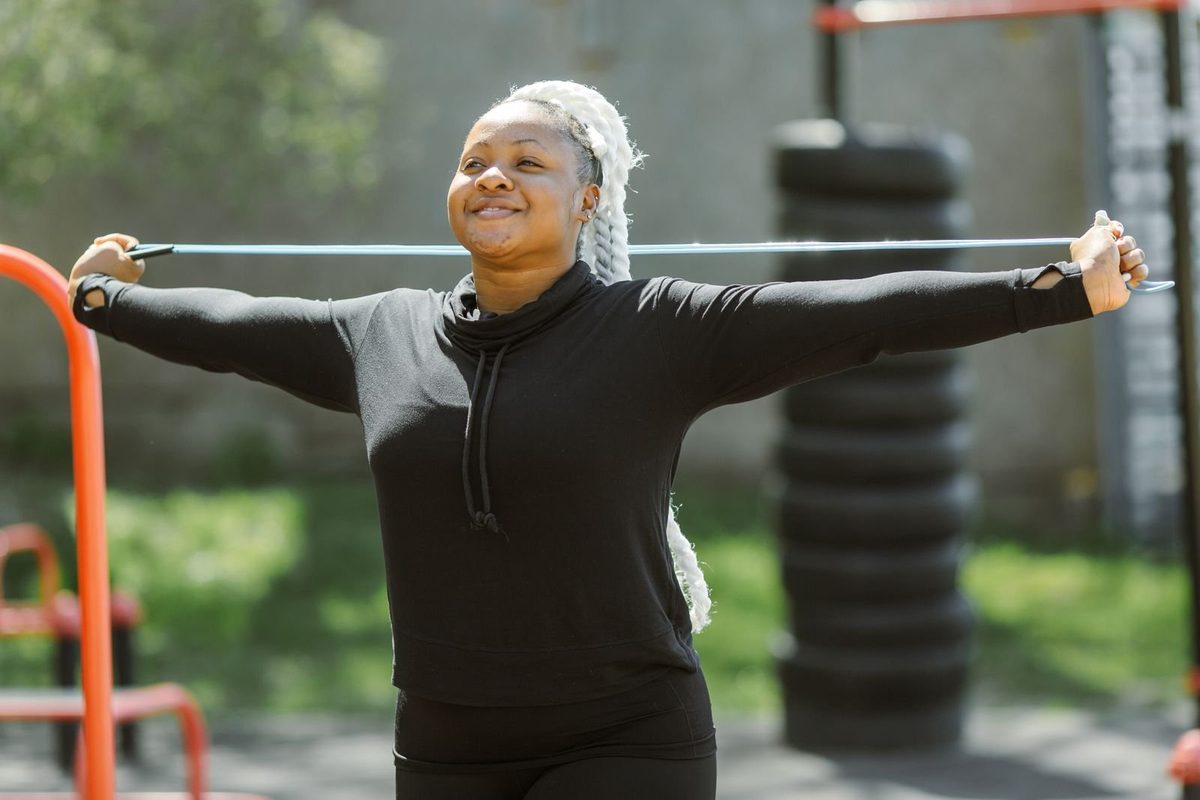
- Muscle-strengthening activity at least 2 days a week, working all major muscle groups (weights, resistance bands, body-weight moves like squats and push-ups)
- At least 150 minutes a week of moderate activity, such as brisk walking, cycling or swimming
New to lifting? Start with light weights and good form. A trainer or physical therapist can help, especially if you have joint pain.
Put protein at every meal
Protein helps preserve muscle. The Menopause Society suggests women aim for about 1.2 grams of protein per kilogram of body weight per day, spread across meals. Build plates around protein, vegetables, fruit, whole grains and healthy fats, and go easy on ultra-processed foods and alcohol.

Protect your sleep
Treating sleep as part of your health plan, not a luxury, supports your appetite, mood and energy to move. A cool bedroom, a consistent schedule and less alcohol at night are good starting points.
Find a stress outlet that fits your life
Walks outside, breathing exercises, yoga, therapy, or simply saying no more often. Lowering your baseline stress helps your body and your mind.
Talk with your clinician about the bigger picture
Your clinician can check for other causes of weight change, like thyroid problems or medication side effects, and look at blood pressure, blood sugar and cholesterol. If hot flashes and poor sleep are making healthy habits hard, treating those symptoms can help. The Menopause Society notes that hormone therapy is not a weight-loss treatment, but it can ease symptoms that get in the way. For some women, other medical options may be worth discussing. Talk with your clinician about what fits your health and goals.
Track the changes, not just the scale
Weight is only one piece of the story. It helps to notice how your body changes alongside your sleep, hot flashes, cycle, mood, cravings and activity. Those connections are often the most useful thing to bring to an appointment.
Menovia makes this simple. Log symptoms, sleep and weight in one tap, and Ziena™, Menovia’s AI companion, helps you see what’s connected and builds a provider-ready report for your next visit. Menovia is built by physicians and made for peri/menopause.
Download Menovia: App Store · Google Play
Frequently asked questions
Why am I gaining weight in peri/menopause when I’m eating the same?
Your body’s needs change. Muscle naturally declines with age, which lowers how much energy you burn at rest, and falling estrogen shifts fat storage toward the belly. Poor sleep, stress and small drops in activity add up too. Eating the same as before can now lead to gradual gain.
Is menopause belly permanent?
Not necessarily. Changes in fat distribution are common, but strength training, regular activity, enough protein, good sleep and stress management all support body composition and health. Everyone’s body responds differently, and the goal is health, not a specific shape.
Does weight gain stop after menopause?
In the SWAN study, the fast changes in fat and muscle leveled off about two years after the final period. Weight can still change with aging and lifestyle afterward.
Does hormone therapy cause or prevent weight gain?
According to The Menopause Society, hormone therapy is not a weight-loss treatment. It may help with symptoms like hot flashes and poor sleep, which can make healthy habits easier. Talk with your clinician about whether it’s right for you.
When should I talk with my clinician about weight changes?
Bring it up at any visit, especially if the change is rapid or unexplained, comes with other new symptoms (like fatigue, hair changes or feeling cold), or if you’re worried about your heart or blood sugar.
What’s the best exercise for peri/menopause weight gain?
A combination works best: strength training at least twice a week to protect muscle, plus about 150 minutes of moderate activity like brisk walking. The best plan is one you can stick with.
Related reading
- How to Eat for Hormone Balance in Menopause
- Menopause and Your Heart
- Our Bones in Midlife
- Why Do I Wake Up at 3 a.m.?
- Navigating the Hormone Therapy Decision
Sources
- The Menopause Society. MenoNote: “Midlife Weight Gain.” https://menopause.org/wp-content/uploads/for-women/MenoNote-Weight-Gain.pdf
- Greendale GA, Sternfeld B, Huang M, et al. “Changes in body composition and weight during the menopause transition.” JCI Insight, 2019 (SWAN). https://pmc.ncbi.nlm.nih.gov/articles/PMC6483504/
- Hurtado MD, Saadedine M, Kapoor E, Shufelt CL, et al. “Weight Gain in Midlife Women.” Current Obesity Reports, 2024. https://doi.org/10.1007/s13679-024-00555-2
- Johns Hopkins Medicine. “Menopause and Weight Gain.” https://www.hopkinsmedicine.org/health/expert-qa/menopause-and-weight-gain
- Mayo Clinic. “The reality of menopause weight gain.” https://www.mayoclinic.org/healthy-lifestyle/womens-health/in-depth/menopause-weight-gain/art-20046058
- U.S. Department of Health and Human Services (ODPHP). “Physical Activity Guidelines for Americans.” https://odphp.health.gov/our-work/nutrition-physical-activity/physical-activity-guidelines
Clinically reviewed by Menovia clinicians. Menovia is built by physicians.
This article is for general education and is not medical advice. Always talk with your clinician about what's right for you.